
Italy is known for its beautiful cities, rich history, and delicious cuisine—but beyond its charm, Italy also offers thousands of work opportunities for foreign workers each year. From hospitality and construction to agriculture, caregiving, and skilled trades, Italy continues to attract talent from around the world.
If you’re looking to start your career in Italy, the Italy Work Permit Visa (Permesso di Lavoro) may be your gateway. This guide explains the process step-by-step, with simple language, real examples, and everything you need to prepare a successful application.
What Is the Italy Work Permit Visa?
The Italy Work Permit Visa is a legal authorization that allows non-EU foreigners to work and live in Italy. It is part of the country’s immigration quota system, also known as the Decreto Flussi (Flow Decree), which regulates how many foreign workers can enter Italy each year. Key features:
- Employer-sponsored
- Quota-based system
- Requires approved Nulla Osta (Work Authorization)
- Leads to a residence permit after arrival
- Can be renewed and can lead to long-term stay
Understanding “Decreto Flussi” 2026
If you are planning to work in Italy, you must understand the Decreto Flussi (The Flow Decree).
The Decreto Flussi is a law issued by the Italian government every year. It sets a strict quota on how many non-EU citizens can enter Italy for work.
The quotas are divided into different categories, such as seasonal work, non-seasonal work, and self-employment. The Italian government usually announces these numbers in the first quarter of the year.

A Short Inspiring Story: How Rohan Started His Life in Italy
Rohan, a 29-year-old from Sri Lanka, always dreamed of working in Europe. But he didn’t know where to begin. One day, he learned about Italy’s annual Decreto Flussi, where thousands of foreign workers receive permits for seasonal and non-seasonal jobs. With the help of a verified employer, Rohan applied for a restaurant assistant job in Rome. Within three months, his Nulla Osta was approved. He then applied for the Italy Work Permit Visa at his embassy and soon found himself working in an Italian restaurant overlooking ancient architecture. Today, Rohan earns a stable income, has a residence permit, and is planning to bring his family. His journey began with one simple step—applying for the Italy Work Permit Visa. 
Types of Italy Work Permit Visas
Italy offers different types of work permits. Understanding the right category is crucial before applying.
1. Seasonal Work Visa (Lavoro Stagionale)
For temporary jobs in:
- Agriculture
- Tourism
- Hospitality
Validity: Up to 9 months
2. Non-Seasonal Work Visa
For long-term jobs in:
- Construction
- Factory work
- Restaurant and hotel jobs
- Caregiving
- Machinery and technical work
- Transport & logistics
Validity: 1 year or more, renewable
3. Highly Skilled Worker Visa
For professionals with specialized qualifications in fields like:
- Engineering
- Healthcare
- Research
- Technology
4. Domestic Worker Visa
For caregivers, babysitters, housekeepers, and elderly care workers.
5. Self-Employment Visa
For entrepreneurs, freelancers, artists, and business owners (limited availability).
Who Can Apply for the Italy Work Permit Visa?
You can apply if:
- You have a job offer from an Italian employer
- Your employer applies for your Nulla Osta
- Your country is included in the annual quota list
- You meet health and character requirements
Countries commonly included in the quotas:
- Bangladesh
- India
- Pakistan
- Nepal
- Sri Lanka
- Philippines
- Morocco
- Tunisia
- Albania
- Egypt
The official quota varies depending on labor needs.
Italy Work Permit Visa Application Process: Step-by-Step Guide
Applying for the Italy Work Permit Visa is a two-stage process involving both employer and worker.
Step 1: Employer Applies for Nulla Osta
The process begins when your employer submits a request for the Nulla Osta, the official work authorization. Your employer must provide:
- Job contract
- Employer ID documents
- Proof of company registration
- Accommodation details for worker
- Labor compliance certificate
The application must be submitted during the Decreto Flussi opening window, which fills up very quickly.
Step 2: Nulla Osta Approval
If approved, the immigration office issues:
- Nulla Osta letter
- Contract of Stay (Contratto di Soggiorno)
- Employer invitation
- Job description
You will receive these documents digitally or via email. Nulla Osta is valid for 6 months.
Step 3: Apply for the Visa at the Italian Embassy
Once you get your Nulla Osta, you can apply for your work visa at your nearest Italian Embassy. You must submit:
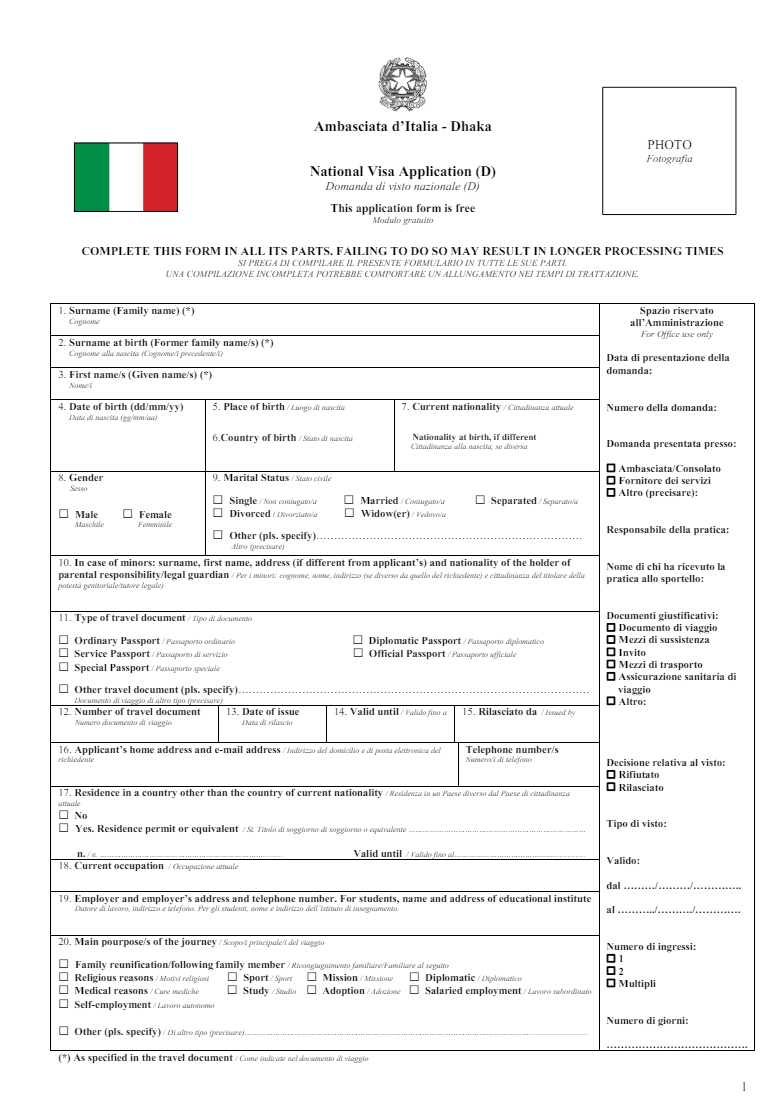
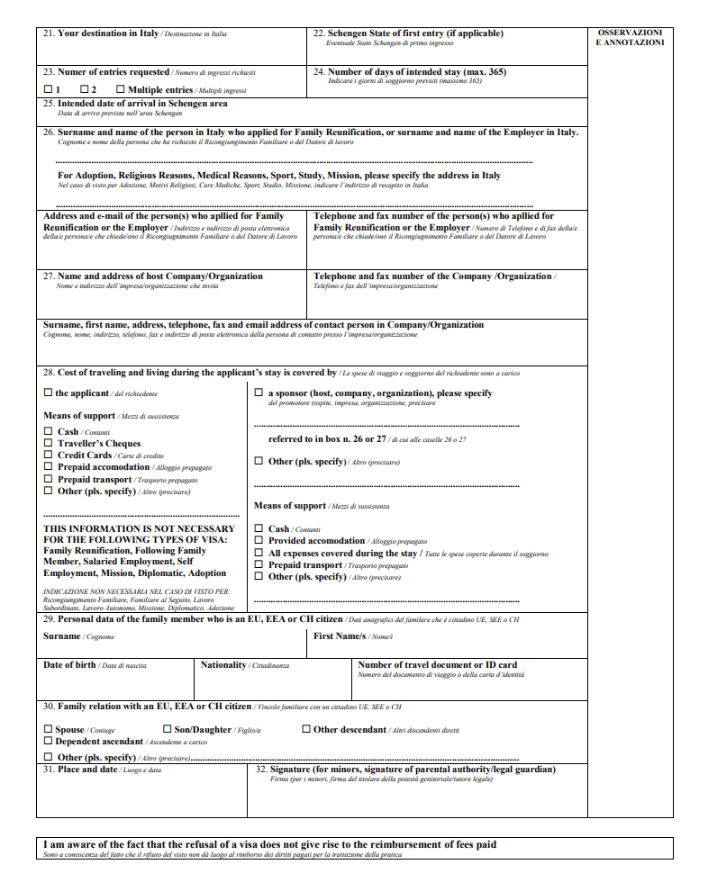
- Visa application form
- Passport (valid for minimum 6 months)
- Nulla Osta
- Job contract
- Passport-size photos
- Police clearance
- Medical insurance
- Accommodation proof
- Experience certificates (if required)
The visa fee is typically €60–€120, depending on your country.
Step 4: Attend Visa Interview
During the interview, expect questions like:
- What is your job role?
- Who is your employer?
- Have you previously visited Italy?
- Why do you want to work in Italy?
Be honest and confident.
Step 5: Wait for Visa Processing
Visa approval time:
- 30–90 days depending on the Embassy workload
- Faster if all documents are correct
Step 6: Travel to Italy
Once approved, you’ll receive a visa sticker on your passport. You can now travel to Italy.
Step 7: Apply for Residence Permit (Permesso di Soggiorno)
Within 8 days of arrival, you must:
- Submit residence permit application
- Provide biometric fingerprints
- Submit passport and visa
- Pay permit fee
The residence permit gives you the legal right to live and work in Italy.
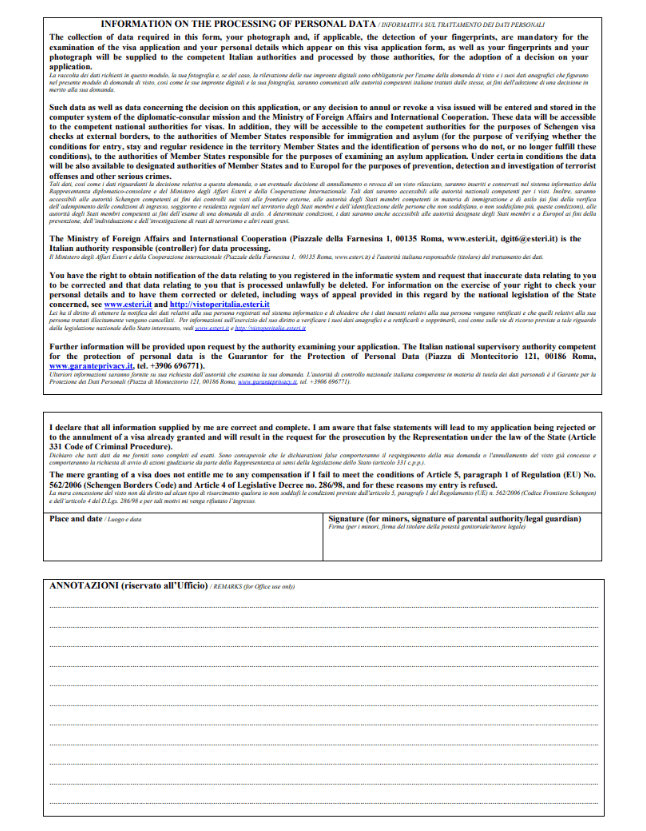
Download Italy Visa Application Forms
Required Documents for Italy Work Permit Visa
Here is a complete checklist for applicants:
Personal Documents
- Passport
- Passport-size photos
- Birth certificate (if required)
- Marriage certificate (if applicable)
Work Documents
- Nulla Osta
- Job contract
- Employer’s sponsorship letter
Supporting Documents
- Police clearance certificate
- Medical insurance
- Accommodation letter
- Educational/work experience papers
- Flight reservation
Make sure all documents are accurate and translated into Italian if required.
Italy Work Visa Processing Time
Processing time depends on multiple factors.
Average timeline:
- Nulla Osta approval: 15–90 days
- Embassy visa processing: 30–90 days
- Residence permit: 30–60 days
Total time: 2–5 months
Salary Expectations for Workers in Italy
Salaries vary by sector.
Average Monthly Salary Ranges:
- Agriculture: €850–€1,400
- Factory/warehouse: €1,200–€1,600
- Hospitality: €1,000–€1,500
- Caregiving: €900–€1,300
- Construction: €1,200–€1,700
- Transport: €1,300–€1,900
Overtime and bonuses may apply.
Living Conditions & Worker Rights in Italy
Italy protects foreign workers under strict labor laws.
Worker Rights Include:
- Legal employment contract
- Standard working hours
- Paid leave
- Sick leave
- Health insurance
- Pension contributions
- Safe work environment
Living Conditions
Many employers provide:
- Shared accommodation
- Basic utilities
- Transport facilities
Most In-Demand Jobs in Italy for Foreign Workers
1. Agriculture
Picking, harvesting, packaging
2. Hospitality
Cooks, cleaners, restaurant helpers
3. Construction
Laborers, masons, carpenters
4. Factory Jobs
Machine operators, packers
5. Elderly Care
Caregivers, domestic workers
6. Logistics
Warehouse staff, drivers These sectors consistently recruit foreign workers under the quota system.
Common Challenges for Workers & How to Overcome Them
Language Barrier
Solution: Learn basic Italian before traveling.
Delay in Nulla Osta
Solution: Ensure employer applies early.
Document Verification Issues
Solution: Keep all papers original and verified.
Housing Difficulties
Solution: Rely on employer-provided accommodation.
Fraud & Scams
Solution: Work only with verified, registered employers.
Key Takeaways
- Italy Work Permit Visa requires employer sponsorship.
- Nulla Osta approval is the first step.
- Visa must be applied at Embassy after Nulla Osta.
- Residence permit is mandatory after arrival.
- Processing takes around 2–5 months.
- Jobs in agriculture, construction, caregiving, and hospitality are in high demand.
- Always avoid fake documents to prevent rejection.
Frequently Asked Questions (FAQs)
1. Can I change employers after getting the work permit?
Changing employers is allowed only with approval from immigration authorities.
2. Do I need to speak Italian to work in Italy?
Not always, but basic Italian helps with daily communication and job tasks.
3. Can my family join me?
Family reunification depends on your job type and residence permit category.
4. How long can I stay in Italy on a work permit?
Usually 1 year or more, depending on the contract and renewal.
5. Is the Italy Work Permit Visa renewable?
Yes, it can be renewed as long as you remain employed and follow legal procedures.