Are you dreaming of living in a beautiful European country with warm weather, incredibly friendly people, and an excellent, straightforward path to citizenship? If so, Portugal has been a favorite destination for Bangladeshi migrants for years.
However, if you are planning to move there, you need to wake up to a new reality. The Portuguese immigration system has completely changed for 2026. The days of entering Portugal as a tourist and slowly converting your status to a legal worker are officially over.
If you want to work in Portugal today, you must secure a genuine job offer and apply for the correct work visa from your home country before you even book a flight.
Whether you are an engineer, IT specialist, or a skilled tradesperson (like a welder, plumber, or construction worker), this complete guide will explain the strict new 2026 rules, the types of long-term work visas available, and the exact step-by-step application process from Bangladesh.
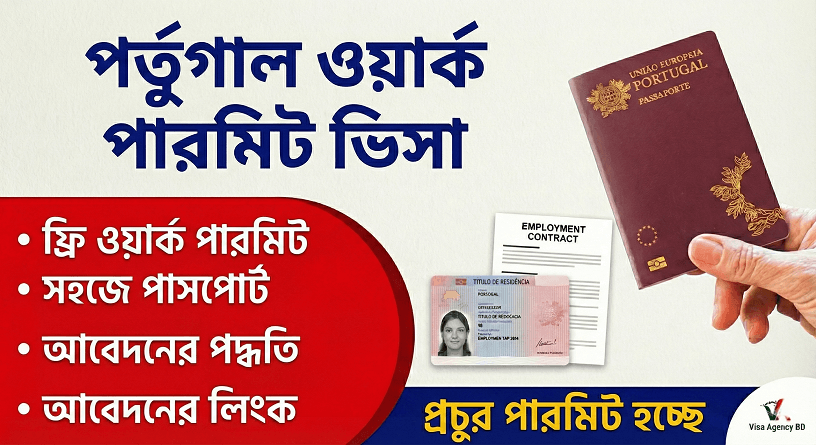
Why Choose Portugal? (The European Dream)
Before we look at the complex visa process, here are some amazing facts about living and working in Portugal that make it a top choice for South Asians:
-
The 5-Year Citizenship Rule: Portugal offers one of the absolute fastest routes to a powerful European passport. After just 5 years of legal residence, you can apply for Portuguese citizenship, which allows you to live and work anywhere in the EU (including Germany and France).
-
300 Days of Sunshine: Unlike the freezing, dark winters of Northern Europe, Portugal enjoys around 300 days of glorious sunshine a year. The Mediterranean climate is extremely comfortable for Bangladeshis!
-
One of the Safest Countries: Portugal consistently ranks in the top 10 safest countries in the Global Peace Index. It is incredibly peaceful and culturally welcoming to foreigners.
-
Family Reunification: Once you have your residence permit, the Portuguese government allows you to bring your spouse and dependent children to live with you under the Family Reunification program.
CRITICAL 2026 UPDATE: The End of “Expression of Interest”
If you are planning to move to Portugal, you absolutely must know about the recent, massive changes to their immigration laws designed to stop illegal migration:
-
No More Tourist-to-Worker Conversions: The Portuguese government has officially abolished the “Manifestação de Interesse” (Expression of Interest) pathway. You can no longer enter Portugal on a Schengen tourist visa, find a low-paying job, and apply for residency. You must have a pre-approved work visa before entering the country.
-
Old Job-Seeker Visa Canceled: The popular general job-seeker visa was abolished. It has been replaced with a highly restrictive “Skilled Job Seeker Visa,” which is only available to professionals with specialized, recognized technical qualifications.
Most In-Demand Jobs in Portugal Right Now
To get a visa, you need a job offer. Fortunately, Portugal is currently facing severe labor shortages in the following sectors:
-
Information Technology (IT): Software developers, system administrators, and data analysts.
-
Construction & Trades: Masons, carpenters, electricians, and plumbers.
-
Hospitality & Tourism: Hotel managers, professional chefs, and specialized customer service agents.
-
Agriculture: Farm managers and skilled agricultural workers (usually for the southern regions).
-
Healthcare: Nurses and care workers for the elderly.
Top Portugal Work Visas for Bangladeshis
Because of the new rules, Bangladeshi citizens must apply for a specific long-term National Visa (Type D) based on a confirmed job offer. The two main options are:
1. The D1 Visa (Subordinate Worker Visa)
This is the standard work visa for most Bangladeshi applicants who have a valid, full-time job offer from a Portuguese company.
-
Who is it for? General skilled workers, construction workers, hospitality staff, and tradespeople.
-
Requirements: You need an official employment contract signed by a Portuguese employer that lasts for at least one year. Your income must be at least equal to the Portuguese national minimum wage.
2. The D3 Visa (Highly Qualified Professionals / EU Blue Card)
This is a premium, fast-track visa for highly educated experts and corporate professionals.
-
Who is it for? IT specialists, engineers, doctors, and senior managers.
-
Requirements: You must have a recognized university degree or at least five years of high-level professional experience. Your salary must be at least 1.5 times the Portuguese national average.
You can also check for: Italy Work Permit Visa Apply.
Salary Expectations and Cost of Living (2026 Update)
You need to understand the financial reality of moving to Portugal. While the lifestyle is great, salaries are lower compared to Northern Europe.
-
Minimum Wage: As of 2026, the Portuguese minimum wage has been updated to approximately €870 per month (This is roughly 1 Lakh BDT to 1.1 Lakh BDT per month). D1 visa applicants usually start around this range.
-
Highly Skilled Salary: IT professionals and engineers on D3 visas usually earn between €2,000 to €4,000+ per month (Roughly 2.5 Lakh to 5 Lakh BDT).
The Cost of Living: Compared to the UK or Germany, Portugal is affordable. However, major cities like Lisbon and Porto are experiencing a housing crisis.
-
Renting a room in Lisbon can cost €400 to €600 per month.
-
Pro Tip: Look for jobs in regional areas or smaller cities like Braga or Coimbra to save massive amounts on rent!
The Step-by-Step Application Process from Bangladesh
Applying for a Portugal Work Visa requires careful preparation and patience. Here is the exact process:
Step 1: Secure a Job Offer Online
Since you cannot go to Portugal to look for work anymore, you must apply for jobs online from Bangladesh. Use platforms like LinkedIn, Net-Empregos, or specialized recruiters. You need a formal employment contract or a “promise of employment contract.”
Step 2: Employer Gets Approval in Portugal (IEFP)
Your Portuguese employer must justify the hire to the government. For D1 visas, they usually need a declaration from the IEFP (Institute for Employment and Vocational Training). This document proves that the job vacancy was advertised locally but could not be filled by a Portuguese or EU citizen.
Step 3: Gather and Notarize Documents
Collect all your educational certificates, police clearance, and the job contract. All your Bangladeshi documents must be translated into English or Portuguese and officially notarized.
Step 4: Book an Appointment and Submit
You must schedule an appointment to submit your application and provide biometrics. Depending on current diplomatic arrangements, Bangladeshi citizens submit their files either through the VFS Global Application Center in Dhaka (often handled in cooperation with the French Embassy for Schengen matters) or the Portuguese Embassy/VFS in New Delhi, India. All applicants must appear in person.
Step 5: Travel and Register with AIMA
Once your visa is approved, the embassy will stamp a D1 or D3 visa in your passport. This visa is usually valid for 4 months and allows 2 entries. Once you travel to Portugal, you must attend a scheduled appointment with AIMA (the new Portuguese Agency for Integration, Migration, and Asylum) to convert your visa into a physical Residence Permit card.
Complete Document Checklist for Embassy Submission
To avoid visa rejection, ensure your file is perfectly organized with the following documents:
-
Valid Passport: Must be valid for at least three months after your planned departure from Portugal.
-
Employment Contract: A signed copy of your contract stating your job role, salary, working hours, and duration.
-
Employer’s Declaration: The original IEFP approval document provided by your employer.
-
Proof of Qualifications: Your European-format CV, diplomas, and experience certificates.
-
Police Clearance: A clean criminal record certificate issued by the Bangladesh Police (Must be translated, notarized, and not older than 3 months).
-
Accommodation Proof: A registered rental agreement (Contrato de Arrendamento) or an official invitation letter of accommodation in Portugal.
-
Travel Medical Insurance: A valid policy with a minimum coverage of €30,000 to cover you until you are registered with the Portuguese public health system.
Conclusion: Plan Your Move Legally
Portugal is an incredible country with a bright future for hardworking expats. However, the new 2026 immigration laws mean that shortcuts and loopholes are no longer possible.
You must upgrade your skills, secure a genuine job offer online, and apply for your D1 or D3 visa properly from Bangladesh. If you follow the legal path, your journey to a European passport will be smooth and secure.
Frequently Asked Questions (FAQs)
Q: Can I apply for a Portugal work visa without a job offer? A: No. Under the new 2026 rules, you absolutely must have a confirmed job offer or an employment contract before applying for a D1 or D3 long-stay work visa.
Q: Do I need to know the Portuguese language to get the visa? A: Language proficiency is not a strict legal requirement for the visa itself. However, to pass job interviews and integrate successfully, learning basic Portuguese is highly recommended. (Note: A2 level Portuguese is required when you apply for citizenship after 5 years).
Q: Are there fake agents offering Portugal visas in Bangladesh? A: Yes, many! Never pay large sums of money to an agent promising a “tourist to work visa conversion.” That law no longer exists. Only a genuine Portuguese employer can issue a valid job contract.
Q: How long does the visa processing take? A: Processing times vary heavily depending on the embassy’s workload, but generally, it takes 60 to 90 days after submitting your complete file to the embassy.